


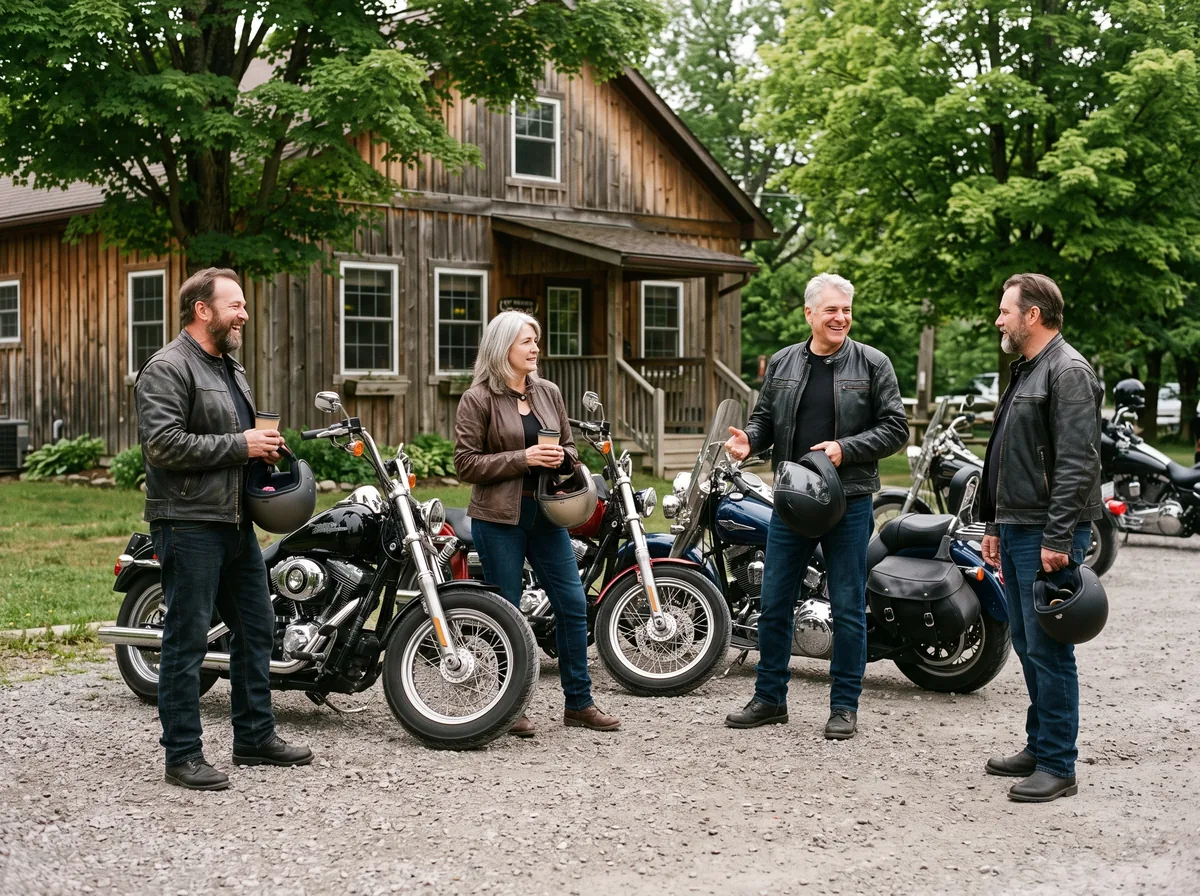
The stereotype says the cruiser motorcycle lifestyle is loud pipes, a patch on the back and a bar at the end of the road. Spend a Sunday morning at any coffee stop between Port Perry and Port Dover and the picture falls apart in about ten minutes: the bikes are cruisers, the riders are mostly in their forties, fifties and sixties, the conversation is about grandchildren, torque and which back road got repaved, and half of them have their Ontario motorcycle coverage and their home and auto with the same broker. The lifestyle is real. It is just not the one in the movies.
This is an attempt to describe it honestly: what the myth gets wrong, what is actually there, and what cruiser riders in this province actually do with their weekends.
The myth
The claim goes like this: cruiser riders are a tribe, the tribe is defined by rebellion, and the bike is a costume. It is a durable story because it was true of a small number of people for a short time, and because it photographs well. What it misses is who actually buys these bikes now, why, and what they do with them. The evidence is not in a film. It is in the parking lot of a Tim Hortons at eight on a Sunday.
What the cruiser motorcycle lifestyle actually looks like
It is slower on purpose
A cruiser is built low and long, with the rider sitting in it not on it. The bike does not reward hurry, and neither does the culture around it. The ride is the point, not the arrival, which is why the cruiser motorcycle lifestyle is organized around loops, stops and the road between them rather than around lap times. The history of the cruiser explains where that posture came from; the cruiser versus power cruiser comparison covers the modern exception.
It is social without being a club
Most cruiser riders in Ontario do not belong to anything with a patch. What they belong to is a loose web of people who ride the same roads: a standing Sunday group of four, a dealer’s ride-out, a charity run once a season, and the manufacturer owner groups that both big American brands run for their customers. Harley-Davidson’s Canadian site promotes its H.O.G. membership across its model pages, and Indian runs its own riders group. Those are community programs from the companies, not gangs.
It is a wave
Two fingers dropped off the left grip at an oncoming bike. Nobody teaches it, everybody does it, and it is the smallest possible version of the whole thing: a nod between strangers who chose the same slower way to get somewhere.
It is a garage
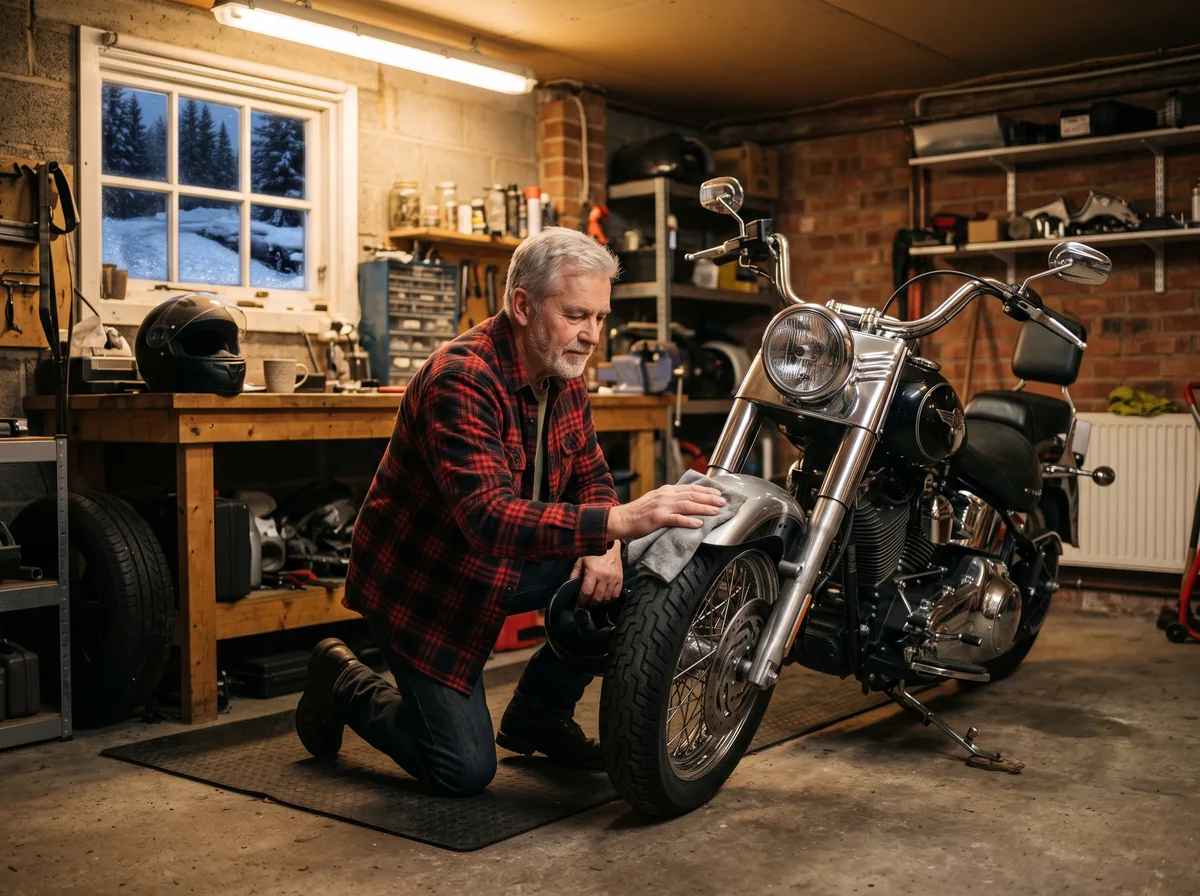
Ask a cruiser rider what they did last night and a surprising number will say they were in the garage with the bike and did not touch a tool. Cleaning chrome, adjusting a mirror, sitting on it. The bike is a hobby even when it is parked, and the older post on how far to take upgrades exists for exactly that reason.
Did you know
Ontario’s best-known cruiser gathering did not start as an event at all. According to the Port Dover Friday the 13th site, it began in November 1981 with roughly twenty-five friends meeting at a hotel bar and deciding to do it again on the next Friday the 13th. Forty-five years later it is still a group of friends. There are just more of them.
What cruiser riders actually do
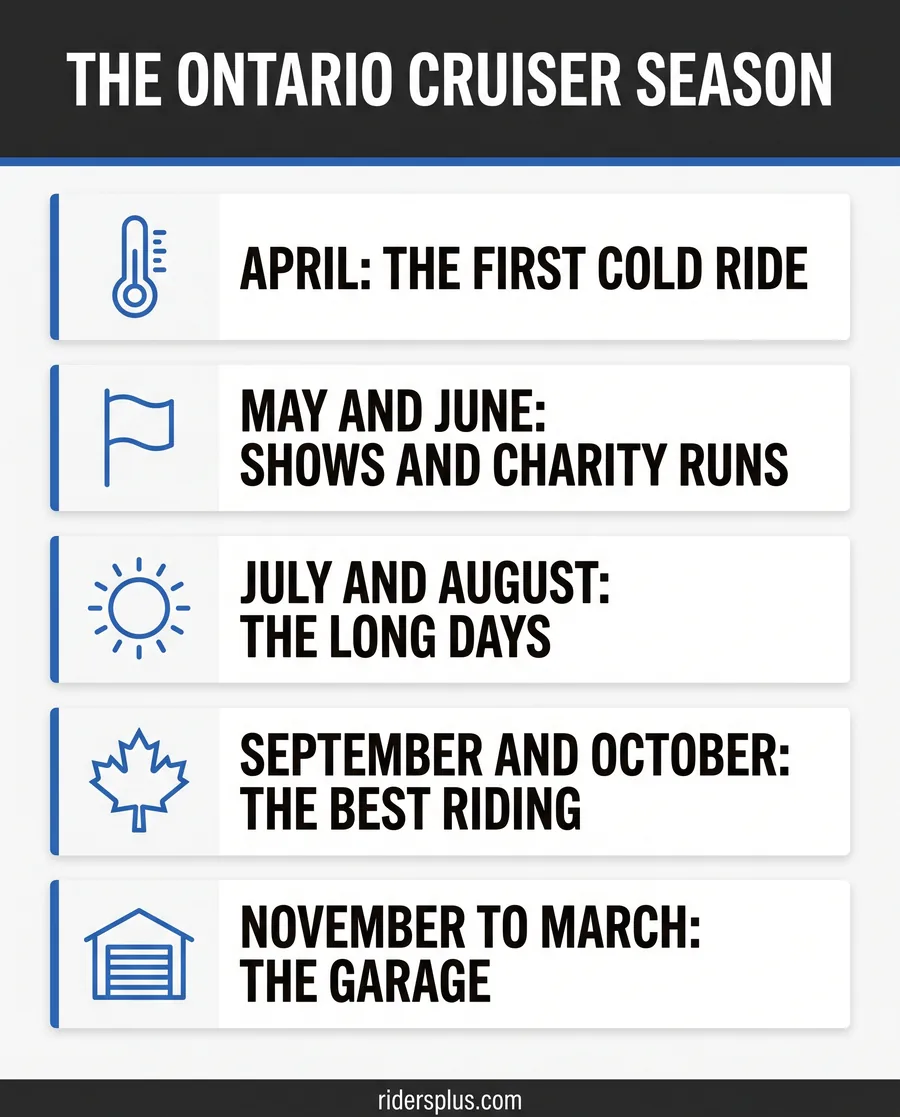
The calendar of the cruiser motorcycle lifestyle in Ontario is predictable enough to write down.
- April: the first ride. Usually too cold, usually taken anyway. The bike comes out of storage, the battery goes back in, and the first loop is short and slow with sand in every corner.
- May and June: the shows and the first runs. The Ontario shows and rides calendar fills up, and the charity season starts; the charity rides page lists the ones riders plan their spring around.
- July and August: the long days. Day loops to the escarpment and the lake, a weekend to the Highlands or Georgian Bay, the Friday the 13th if the calendar gives one.
- September and October: the best riding of the year. Cool air, colour in the valleys, and the annual argument about when to stop.
- November to March: the garage. Storage, cleaning, the shows, and the annual pilgrimage to the winter motorcycle show to sit on bikes nobody is buying.
Riders in Cambridge and Waterloo Region and London and southwestern Ontario will recognize every line of that. So will riders in the north, with the dates shifted a few weeks.
The part nobody romanticizes
Honesty cuts both ways. There are two habits inside the cruiser motorcycle lifestyle that the stereotype gets right and that the culture would be better off without.
Red flag
Loud pipes and a drink at the stop. The first is a neighbour problem and, in many Ontario municipalities, a bylaw problem; the second is the single behaviour most likely to end a riding life. The riders who have been doing this longest tend to have quiet bikes and a coffee in their hand, and that is not a coincidence. The post on riding mistakes that turn into claims is blunt about the second one.
The other honest note is that the bikes are heavy, the riders are not getting younger, and skills fade. Keeping your riding skills sharp over 45 and an advanced course every few years are part of the lifestyle for the riders who intend to be in it at seventy.
The verdict
Cruiser motorcycle riders are a different breed, but not the one in the myth. The breed is slower, older, more social and more domestic than the stereotype allows: a wave on a back road, a coffee stop, a charity run, a garage on a February night. The bike is not a costume. It is the excuse for all of the rest.
Trusted by Ontario riders for more than 25 years, Riders Plus is part of that web too, the part that lets a rider spend the winter in the garage without wondering whether the bike is properly looked after on paper. A motorcycle quote takes a few minutes; the rest of the lifestyle takes a lifetime.
Good to know
This article is general information, not professional advice. Rules, road conditions, event details and requirements vary and change over time. Confirm anything that matters to you with the relevant authority, and talk to a licensed Riders Plus broker about your own coverage. Riders Plus Insurance is not responsible for decisions made solely on the basis of this article.
Download the free quick guide
A one-page season calendar for cruiser riders, from the first April loop to winter storage, with the habits that keep riders in it for decades.
Frequently asked questions
Do I have to join a club to be part of the cruiser motorcycle lifestyle?
No, and most Ontario cruiser riders never do. The social side of riding is mostly informal: a few friends who ride together on Sundays, a dealer’s ride-out, a charity run once a season. The manufacturers also run owner groups for their customers, which are community programs, not clubs in the patch sense, and they are an easy way for a new cruiser owner to find group rides and events. Show up at a Saturday morning dealer coffee or a charity ride and you will have riding partners by the end of it.
Is the cruiser motorcycle lifestyle only for men?
It never was, and it is less so every year. Women have ridden cruisers in Ontario as long as there have been cruisers to ride, and the site’s own International Female Ride Day and Women and their Bikes posts are part of that history. The riders on the back roads on a Sunday are a mix, the owner groups are a mix, and the bikes themselves come in enough seat heights and weights that there is a cruiser for almost any rider who wants one.
How does the lifestyle change my insurance?
The lifestyle itself does not; how the bike is used and where it is kept can. Riders who tour, who commute, who store the bike in a locked garage over winter, or who add accessories over the years are describing things an insurer will ask about on an application or at renewal. None of it is a reason to worry, and all of it is a reason to keep your broker up to date, since the answers can affect how a policy is placed and priced. Riders Plus quotes cruisers every day; a short call keeps the paper in step with the riding.
What is the best way to get into cruiser riding in Ontario?
In order: get the licence properly through the province’s graduated system and a rider training course, buy a cruiser you can comfortably hold up at a standstill rather than the one you want to grow into, and find the Sunday coffee stop nearest you. The site’s guides on getting a licence and insurance, on choosing between new and used, and on what experienced riders wish they had known cover the first two. The third takes care of itself.





join the conversation