

Do you need extra motorcycle passenger insurance in Ontario? Honestly, there is no separate passenger policy to buy. A passenger is part of how a standard Ontario motorcycle policy is built, and the real questions are whether your licence lets you carry one, what the mandatory coverages actually do when there are two people on the bike, and which optional pieces are worth a conversation. The coverage basics for Ontario riders are the starting point; the rest of this post is the questions riders actually ask, answered one at a time.
Read it as a conversation, not a policy. Anything specific to your own bike and passenger belongs in a call with a broker.
Is there such a thing as motorcycle passenger insurance in Ontario?
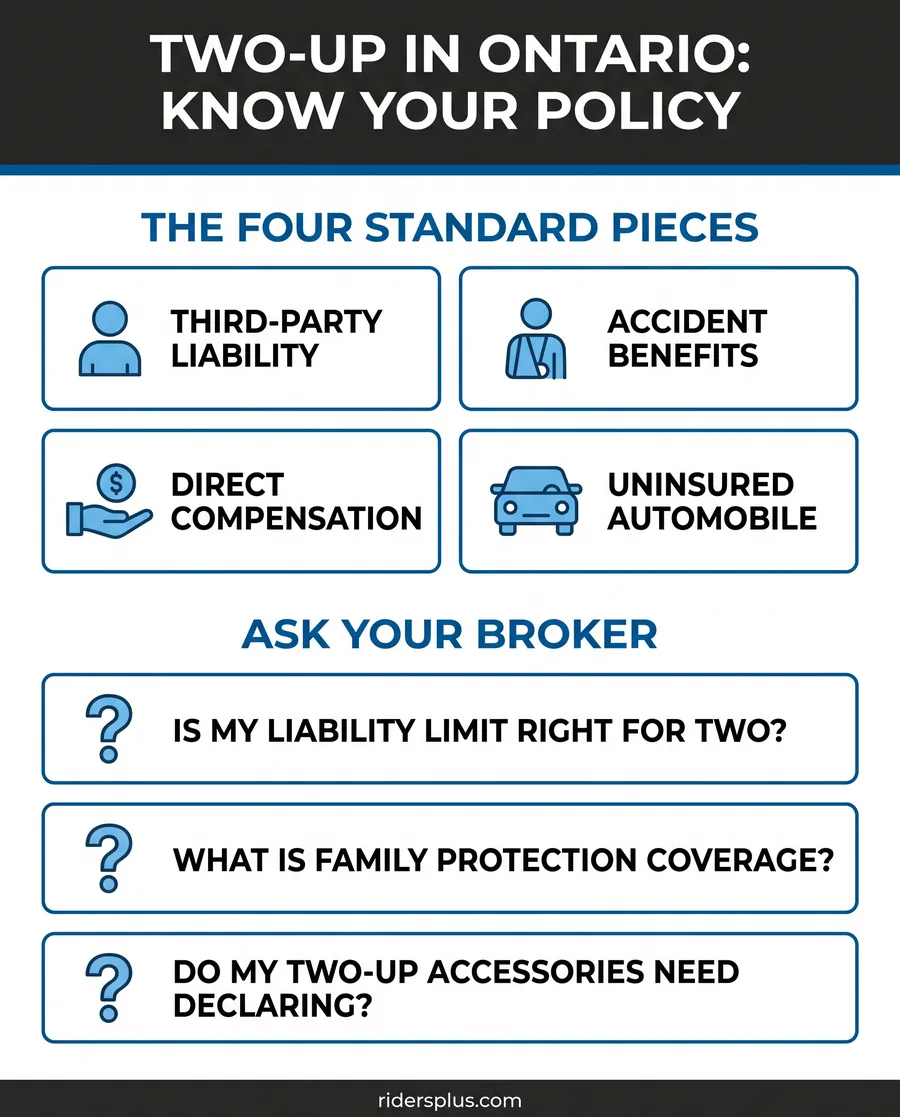
Not as a product you can point to. What exists is the standard Ontario motorcycle policy, and the Financial Services Regulatory Authority of Ontario describes the minimum it has to include: third-party liability, statutory accident benefits, direct compensation for property damage, and uninsured automobile coverage. A passenger sits inside that framework, not beside it.
So when riders ask about motorcycle passenger insurance in Ontario, what they usually mean is one of three things: am I allowed to carry someone, what happens to them if something goes wrong, and should I be carrying more than the minimum. Those are the right questions, and they have different answers.
Am I even allowed to carry a passenger?
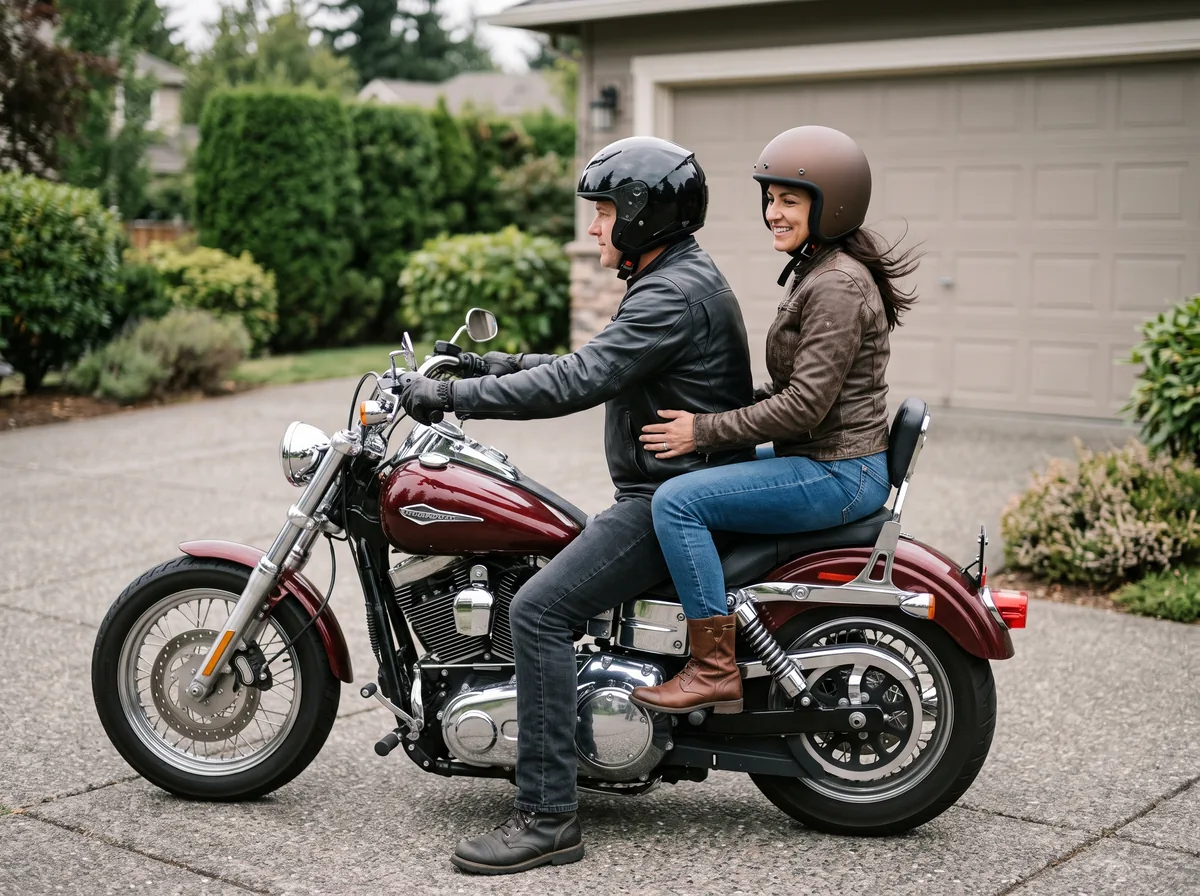
That is the first motorcycle passenger insurance question in Ontario, and it is really a licensing one. According to the province’s motorcycle licence page, an M1 rider must always ride alone and may not carry passengers. At the M2 stage passengers become permitted, and the Ministry’s motorcycle handbook adds a practical caution: even with an M2, wait until you are an experienced rider before carrying anyone.
The handbook also sets out what the bike needs: a seat large enough for two without crowding, footrests for the passenger, and an approved helmet and protective clothing for them. If your bike does not have passenger pegs, it is not a two-up bike, whatever the seat looks like. Choosing a cruiser that suits a passenger is its own topic.
Did you know
Ontario’s helmet law applies to the passenger as much as the rider. The province lists an approved helmet as a requirement for anyone on the bike, with a narrow exemption for Sikh operators and passengers who meet the conditions in the regulation. A passenger without a proper helmet is a legal problem before it is anything else.
What does liability coverage do when I have a passenger?
Third-party liability is the part of the policy that responds when someone else is injured or their property is damaged and you are held responsible. FSRA’s page puts the mandatory minimum at a liability limit of at least $200,000 as of September 2026, and notes that if you are sued, this coverage pays claims up to your limit plus the cost of settling them.
Why does that come up with passengers? Because a passenger is another person, and in a serious crash a rider can find themselves on the wrong side of a claim from the person who was on the back of their own bike. Whether and how a given policy responds in that situation depends on the policy and the circumstances, which is exactly why this is a broker conversation and not a blog answer. What is fair to say is that many riders who carry passengers regularly choose a liability limit well above the minimum, and the liability coverage explainer walks through what the limit means.
What are accident benefits, and do they apply to my passenger?
Statutory accident benefits are the no-fault side of an Ontario policy. FSRA describes them as coverage that provides supplementary medical, rehabilitation, attendant care, caregiver, non-earner, income replacement and death benefits if you are killed or injured in an accident, regardless of who caused it. Ontario has been changing which of those pieces are standard and which are optional, so the exact list on your policy depends on your renewal date and the choices made on it.
How a passenger accesses benefits after a crash, and through whose policy, follows rules that turn on the facts of the situation. The honest general answer is that the system is designed so that injured people have a route to benefits, and the specific route is not something a rider should assume in advance. The accident benefits explainer covers the categories; your broker can tell you what your policy actually carries.
People often ask: can my passenger sue me?
In Ontario, a person injured as a passenger can, in some circumstances, bring a claim against the rider, the same way any injured person can bring a claim against a driver they hold responsible. Whether a claim succeeds, and what a policy does about it, depends on the facts and the policy. That possibility is the reason liability limits matter more to two-up riders than to riders who always go alone.
What is the OPCF 44R everyone mentions?
OPCF 44R is the form number of a standard optional Ontario endorsement, usually called family protection coverage. In general terms it is designed to help when you or certain family members are seriously injured by an at-fault driver whose liability coverage is lower than your own. It is not a passenger policy, but it comes up in passenger conversations because the person on the back is so often a spouse or a family member.
What it covers, who counts as family, and how it interacts with the rest of a policy are questions for the actual endorsement wording and your broker, not for a summary. The Ontario endorsements overview lists the common ones so you know what to ask about.
Does carrying a passenger change my premium?
Sometimes. There is no fixed motorcycle passenger insurance surcharge in Ontario; it depends on the insurer and on what else changes with the passenger. Two things commonly move the conversation: the liability limit you choose, and any equipment you add to make the bike two-up ready, since added equipment is often treated differently from the bike itself. A backrest, a new seat and a set of bags are worth mentioning, and the post on modifications and insurance explains why.
There is no useful rule of thumb here. Ask. A Riders Plus broker quotes two-up riders every week of the season, and can tell you what a higher limit costs on your bike instead of on an imaginary one.
What should I tell my passenger before we leave?
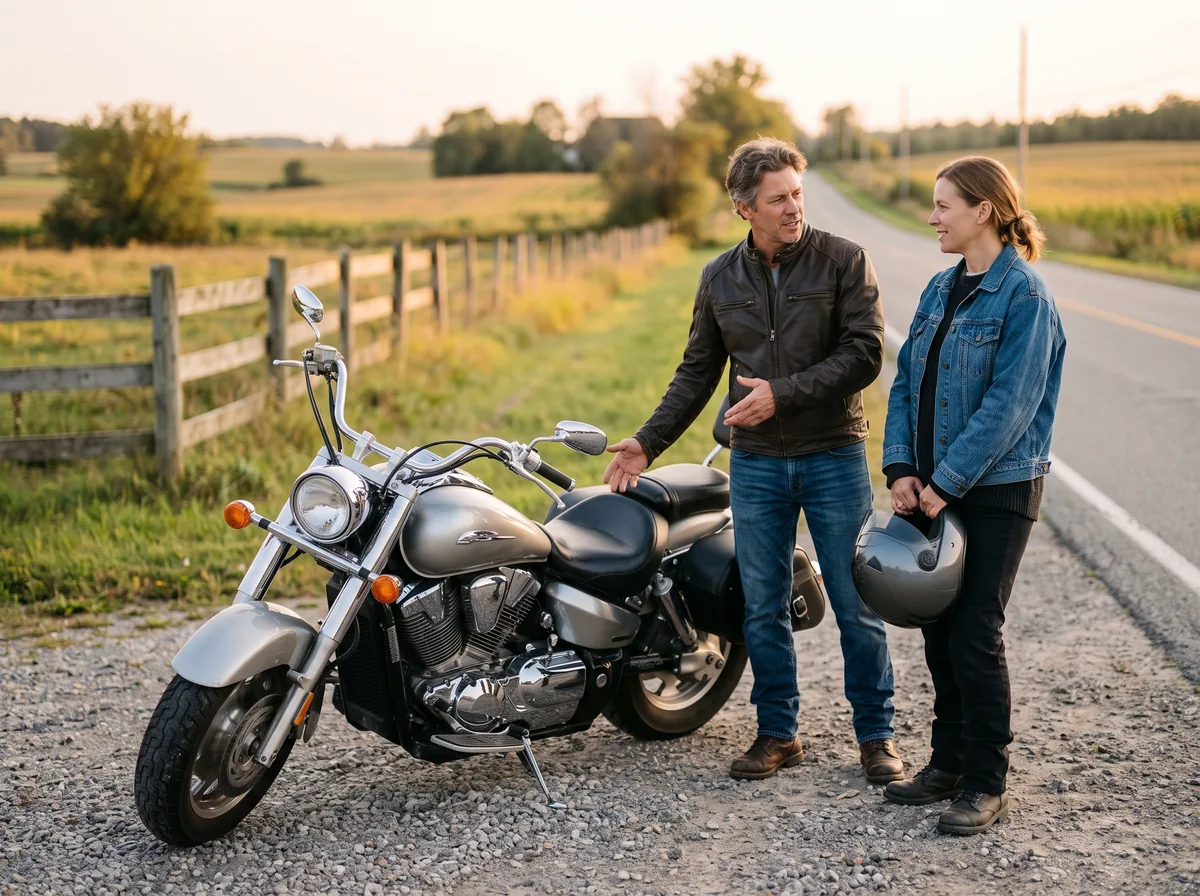
The Ministry’s handbook is specific, and it is good advice even if your passenger has ridden before. Tell them to get on after the engine is running, sit as far forward as they can without crowding you, hold your waist or hips, keep both feet on the pegs at all times including at stops, lean with the bike, and avoid unnecessary movement or talk. Warn them before you start, stop hard, turn sharply or hit a bump.
Then adjust the bike: rear preload for the extra weight where the bike allows it, tire pressures per the owner’s manual, mirrors and headlight with the passenger seated. And ride differently. The handbook’s line is worth remembering: the heavier the passenger, the slower the bike responds.
Good to know
This article is general information for Ontario riders, not insurance, legal or financial advice, and it does not describe the terms of any policy. Coverage, eligibility and pricing depend on the insurer, the rider and the bike, and they change over time. Talk to a licensed Riders Plus broker about your own situation before you make a decision. Riders Plus Insurance is not responsible for decisions made solely on the basis of this article.
Download the free quick guide
A one-page list of what to ask your broker before you carry a passenger, plus the handbook’s passenger briefing.
Still wondering?
My spouse rides on the back most weekends. Is that a different conversation?
It is the same conversation with higher stakes, and it is the one most worth having. A regular passenger who is also family is exactly the situation the family protection endorsement was written for, and it is also the situation where a liability limit chosen years ago for solo riding may no longer fit. Bring both up at renewal. A broker can walk through the options in ten minutes, and the answer will be specific to your policy rather than general.
Does home, auto and motorcycle bundling change any of this?
Not the passenger questions themselves, but a rider whose home, auto and bike are placed through the same brokerage has one person looking at the whole picture, which makes it easier to keep liability limits and endorsements consistent across policies. What bundling actually means in Ontario is its own post; the short version is that it is a conversation worth having at the same time as this one.
If it were my own bike and my own passenger, I would stop guessing about motorcycle passenger insurance in Ontario and ask what the policy does for the person on the back. Riders in Markham and York Region and Ajax and Durham can reach a Riders Plus broker with the questions on this page, or start with an online motorcycle quote. Make sure you’re covered for two before the first ride for two.





join the conversation