


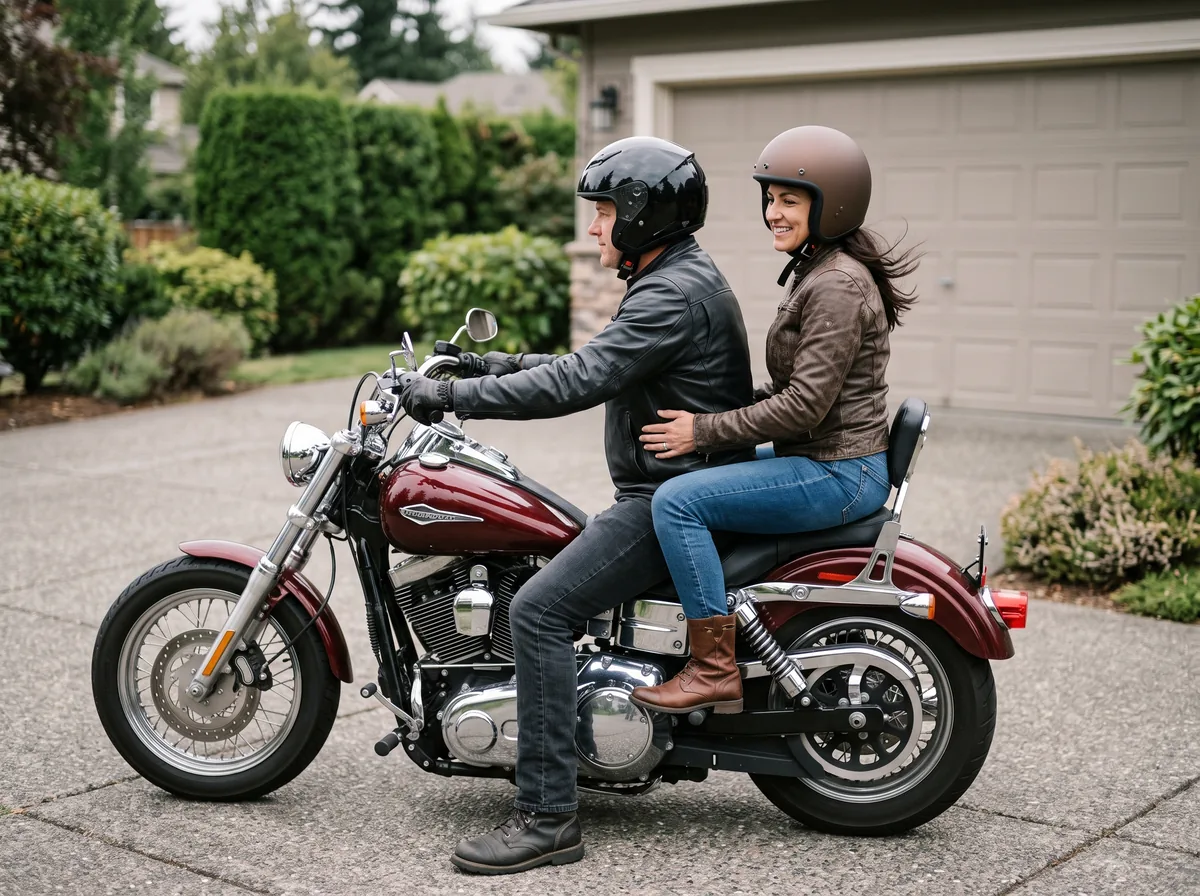
The best cruiser motorcycle for a passenger is the one that keeps that second person coming back, and it is usually not the bike the rider would have picked alone. It is also a bike worth insuring properly for two, which is where the Ontario motorcycle coverage basics come in.
This guide is written for the rider doing the choosing. It covers what a passenger actually feels on a cruiser, how the main categories compare for two-up riding, which current models are built for it, and what to check before you sign for one.
What a passenger actually feels on a cruiser
A rider has bars to hold, pegs to brace against and a view of the road that lets them anticipate every bump and stop. A passenger has none of that. They feel the seat, the wind, the suspension and the rider’s braking, in that order, and they feel all of it more than the rider does.
The Ontario Ministry of Transportation’s motorcycle handbook sets the floor: a seat large enough for two without crowding, footrests for the passenger, an approved helmet and protective clothing for them, and a bike that has been adjusted for the extra weight. That is the legal and practical minimum. Comfort starts a long way above it.
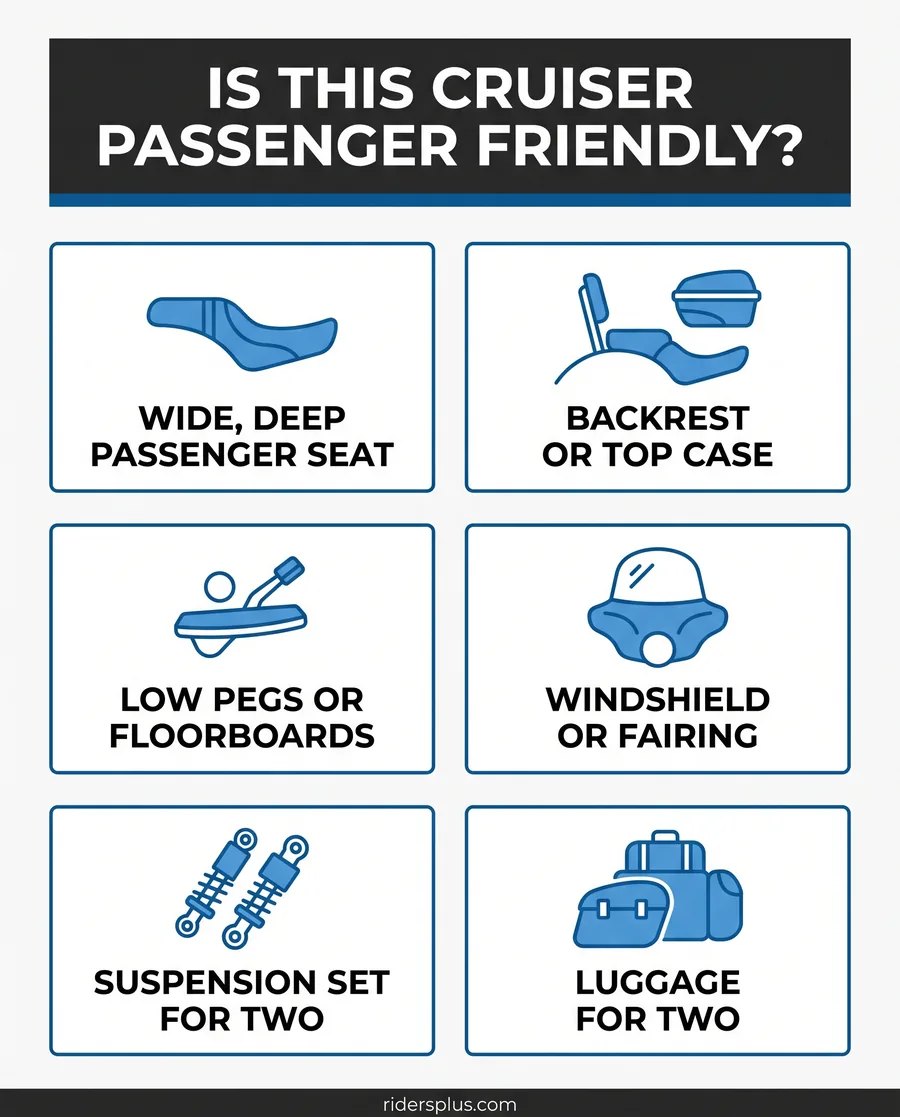
- Seat. Width, padding depth and a slight forward tilt matter more than anything else. A narrow bobber-style pillion pad is a thirty-minute seat, not a three-hour one.
- Backrest. A passenger backrest, whether a sissy bar pad or an integrated top-case back, is the single biggest comfort upgrade for two-up riding, because it lets the passenger relax instead of gripping.
- Footpeg position. Pegs mounted high and far back fold a passenger’s knees for hours. Floorboards or lower-set pegs are kinder.
- Wind. On a bike with no fairing or windshield, the passenger takes the rider’s turbulence in the chest and helmet all day.
- Suspension. Short-travel rear shocks that look good on a low cruiser bottom out with two aboard, and the passenger sits right over them.
Every category of cruiser handles those five things differently, which is where the real decision lives.
Three cruiser categories, compared for two-up riding
Cruisers are not one thing, and the best cruiser motorcycle for a passenger depends on which kind you mean. The useful split is between classic cruisers, baggers, and full-dress touring cruisers.
| Classic cruiser | Bagger | Full-dress touring | |
|---|---|---|---|
| Passenger seat | Often a small pillion pad; upgradeable | Wider two-piece or one-piece seat | Broad, deep, often heated |
| Backrest | Optional add-on | Optional or accessory | Integrated with top case |
| Wind protection | Little to none without a windshield | Fairing protects the rider more than the passenger | Fairing plus lowers and a tall screen |
| Luggage | Minimal | Hard saddlebags | Saddlebags plus top case |
| Weight and low-speed handling | Lightest of the three | Heavier | Heaviest; needs confident low-speed skills |
| Best two-up use | Short local rides | Day trips and weekends | Multi-day touring |
The pattern is simple: the further you plan to ride together, the further right on that table you should be looking. A classic cruiser can be made passenger-friendly for short rides. A full-dress tourer already is.
The best cruiser motorcycle for passenger comfort in 2026: current models
These are current-model-year bikes from the two big American cruiser makers whose Canadian pages list them as of September 2026. Specs and pricing change every model year, so confirm anything that matters with the manufacturer’s site or an Ontario dealer before you decide. Both brands also build non-cruiser models; this list stays on the cruisers.
Full-dress touring cruisers
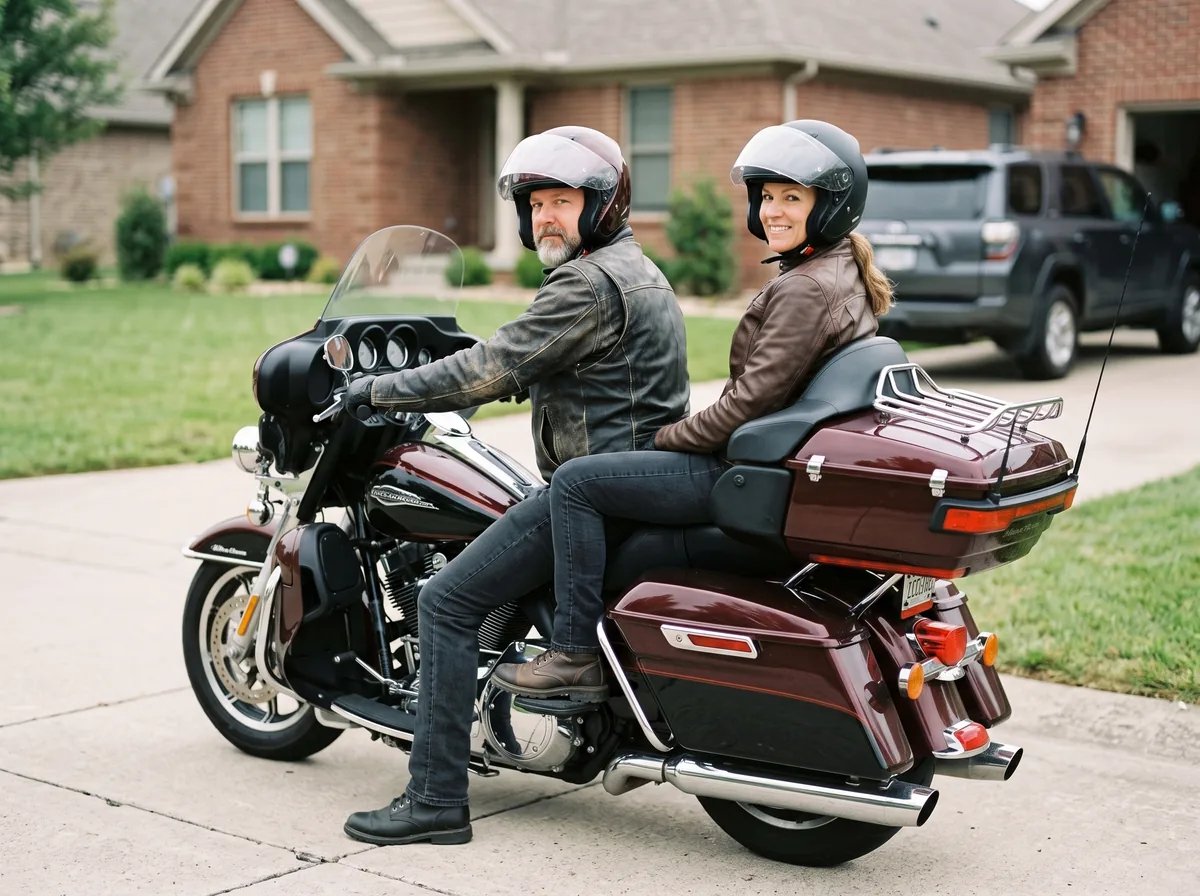
Harley-Davidson’s Road Glide Limited and Street Glide Limited are the brand’s two-up flagships: a full fairing, a top case with an integrated passenger backrest, and a seat designed for long days. Indian’s Roadmaster family is the direct equivalent, with a trunk-mounted backrest and a passenger seat built for long days rather than short hops. If the goal is a week on the road together, start here.
Baggers
Indian’s Chieftain models and Springfield bagger keep the hard bags and fairing of a tourer without the top case, which means the passenger backrest is an accessory rather than standard. Harley’s Low Rider ST sits at the sportier end of the same idea. Baggers make excellent weekend two-up bikes once a backrest is fitted.
Classic cruisers that carry a passenger well
Harley-Davidson’s Heritage Classic and Indian’s Chief Vintage are the traditional choices: soft bags, windshield, a proper two-up seat, and a look that fits a small-town main street. They are lighter than a tourer and easier to manage at walking pace, which matters for many riders more than a top case ever will.
Did you know
In Ontario, a rider holding an M1 licence is not permitted to carry a passenger at all, according to the province’s motorcycle licence rules. Passengers become an option at the M2 stage, and the Ministry’s own handbook suggests waiting until you are an experienced rider even then.
Making a bike two-up ready
If the bike you already love is a classic cruiser, it can still become a good passenger bike. The usual upgrades, in order of impact:
- A real passenger seat. Replace the pillion pad with a wider, deeper two-up seat from the manufacturer or a reputable aftermarket maker.
- A backrest. A sissy bar with a pad, or a detachable backrest, changes the ride more than any other single part.
- A windshield. Even a mid-height screen takes the worst of the blast off the passenger’s helmet.
- Suspension adjustment or an upgrade. At minimum, set the rear preload for two; if the shocks still bottom out, longer or better-damped shocks are the fix.
- Floorboards or relocated pegs. Let the passenger’s knees open up.
Two cautions. First, accessories that change the bike are worth mentioning to your broker, since added equipment is commonly treated differently from the bike itself; the earlier post on modifications and insurance covers which changes matter. Second, extra weight and a higher seat back change how the bike handles, so take the first two-up ride somewhere quiet.
Pro tip
Before buying a backrest or seat, sit your passenger on the bike in the showroom with the rider aboard, engine off, both feet up. Thirty seconds of that tells you more about peg height and seat width than any spec sheet.
Which bike fits which couple
The best cruiser motorcycle for a passenger is really the best one for a particular pair of people. A few honest matches, based on how Ontario riders actually use these bikes:
- Sunday breakfast runs and the odd charity ride: a Heritage Classic or Chief Vintage with a backrest added.
- Weekend trips to Port Dover, Bancroft or the Bruce: a bagger with a backrest and a decent screen.
- Two weeks to the Maritimes or the Rockies: a Road Glide Limited, Street Glide Limited or Roadmaster.
- A passenger who is nervous or new to bikes: the lowest, most stable option you can manage, with a backrest, and short rides first.
- A rider who struggles with a heavy bike at walking pace: a classic cruiser made two-up ready, not a tourer. A dropped bike with a passenger aboard is a worse outcome than a slightly less plush seat.
Before you buy: the passenger’s test ride
Most dealers will arrange a two-up test ride if you ask, and it is the only test of the best cruiser motorcycle for a passenger that counts. Take it on a road with a few bumps and a couple of stops, and ask the passenger three questions afterward: where did you feel the bumps, what were you holding onto, and would you do two hours of that? Ontario’s motorcycle dealerships are used to the request.
Then make sure the second person on the bike is accounted for on paper. A Riders Plus broker can walk through how passengers fit into an Ontario motorcycle policy, and riders in Burlington and Halton or Newmarket and York Region can start with a quick online motorcycle quote. Award-winning motorcycle insurance is a good thing to have sorted before the first long ride together.
Good to know
This article is general information, not professional advice. Rules, road conditions, event details and requirements vary and change over time. Confirm anything that matters to you with the relevant authority, and talk to a licensed Riders Plus broker about your own coverage. Riders Plus Insurance is not responsible for decisions made solely on the basis of this article.
Download the free quick guide
A one-page checklist for choosing and setting up a cruiser for a passenger, plus the questions to ask on the test ride.
Frequently asked questions
Is a heavier touring cruiser harder to ride with a passenger?
At speed, no; the extra mass and longer wheelbase usually make a full-dress tourer feel more planted with two aboard, not less. The difficulty is at walking pace: parking lots, U-turns, and stopping on a camber with a passenger shifting their weight. Riders who are comfortable muscling a heavy bike around at low speed tend to love tourers for two-up work. Riders who are not should be honest about that and choose a lighter bike made two-up ready, or take a course on slow-speed handling before committing.
Does the passenger need their own gear?
Yes. Ontario requires an approved helmet for the passenger as well as the rider, and the Ministry’s handbook calls for protective clothing too. In practice that means a helmet that fits them properly, a jacket with some abrasion resistance, gloves, long pants and over-the-ankle footwear. A borrowed, ill-fitting helmet is the most common shortcut and the worst one; treat the passenger’s gear as part of the cost of the bike.
How do I set up the bike before the first ride with a passenger?
Follow the handbook’s checklist: adjust rear suspension preload for the added weight where the bike allows it, check the owner’s manual for the recommended tire pressures when carrying a passenger, adjust the mirrors and headlight with the passenger seated, and brief them on how to get on, where to hold, keeping both feet on the pegs at stops, and leaning with the bike. Then ride more gently than usual: the bike will take longer to stop and turn.
Do I need to tell my broker that I carry a passenger?
It is worth a conversation. Carrying passengers is a normal part of riding, but how passengers fit into a specific policy, and how any accessories you add to make the bike two-up ready are treated, depends on the insurer. A short call to a Riders Plus broker settles it, and it is far better done before the first long trip than after something has happened.
The rider chooses the bike. The passenger decides whether there is a second ride. The best cruiser motorcycle for a passenger is the one chosen for the second ride.





join the conversation